Starry twilight sky over a dark, open plowed field with two trees

Pastoral Astronomy: How to Read the Night Sky Across Quiet Open Acreage

Embracing the Quiet Wonder of Open Skies

Stepping into an unlit country paddock after sunset can feel like crossing a gentle threshold. The last sounds of the day settle into the grass, fence lines become soft silhouettes, and the sky opens without the bright interruptions familiar from towns and cities. On quiet acreage, even an ordinary evening can offer a fine view of the Moon, familiar stars, wandering planets, or a brief meteor passing overhead.

Pastoral stargazing asks very little of you. A warm blanket, a sheltered patch of meadow, and an unobstructed horizon are enough to begin. The pleasure lies in slowing down rather than collecting observations. Leave the phone indoors or keep it switched off, allow the eyes to grow accustomed to the dark, and let the evening unfold at its own unhurried pace. For guests at a rural lodge or countryside retreat, this simple ritual can become one of the most restorative parts of a stay.

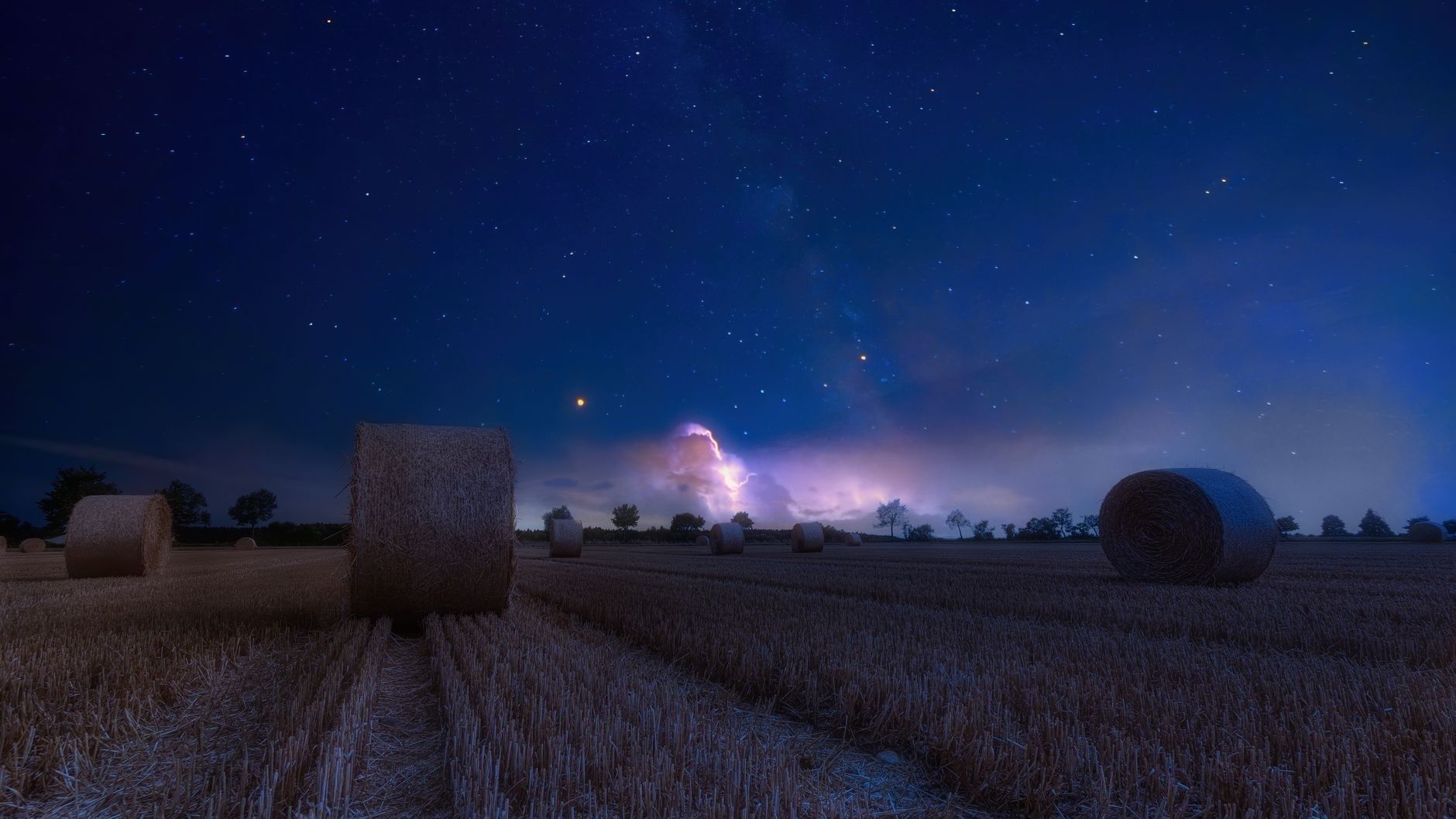
Star-filled sky and lightning over hay bales in a dark rural field
Far from urban glare, a quiet rural setting gives the eyes time to adjust and reveals the layered detail of the night sky.

Cultivating Natural Dark Adaptation in the Countryside

The night sky does not reveal all its detail at once. When you first leave a lit room, the eyes are still relying heavily on cone cells, which support color and sharp vision in brighter conditions. Over approximately twenty to thirty minutes in darkness, rod cells become increasingly important. Rods are more sensitive to faint light, allowing dim stars and subtle stretches of the Milky Way to emerge gradually. The change can be surprisingly noticeable: a patch of sky that seemed empty at first may begin to show layers of stars.

Artificial light is the main obstacle to this adjustment. Before settling outside, ask that porch lamps, stable lights, pathway fixtures, and nearby indoor lighting be switched off or shielded where practical. A small red light is preferable to a bright white flashlight because it is less disruptive to night vision. Keep the beam directed toward the ground, use the lowest useful brightness, and avoid looking directly into another person”s lamp. National Park Service astronomy guidance explains how allowing the eyes to adjust naturally helps observers notice faint celestial details without artificial aids.

  • Give the eyes at least twenty minutes, and ideally closer to thirty minutes, before judging the quality of the sky.
  • Choose a position away from porch illumination, vehicle headlights, and bright windows.
  • Use a dim red light only when necessary, keeping it covered or pointed down.
  • Bring layered quilts, wool throws, and a reclining lounger so comfort does not interrupt observation.
  • Keep a warm drink nearby, since stillness becomes much easier when hands and feet remain warm.

Comfort matters more than many first-time observers expect. A reclining lounger reduces neck strain and makes it easier to scan the sky slowly, while layered quilts allow you to adjust as the temperature falls. In horse-country settings, choose a firm, dry spot well clear of fences, gates, water troughs, and areas used by livestock. The safest and most restful vantage point is one agreed with the property team, especially where paddocks remain occupied after dark.

Learning to Read Celestial Motion Across the Horizon

One of the most satisfying early skills is learning to distinguish what moves steadily from what merely appears to move. Planets generally shine with a steady light because they are comparatively bright discs in the sky, even though atmospheric turbulence can occasionally affect their appearance. Stars are much farther away and appear as points of light, so they commonly twinkle more noticeably. Bright planets may be visible near the horizon after sunset or before sunrise, but their exact visibility depends on the date, location, and position of the Moon.

Satellites provide another quiet spectacle. A high-altitude satellite can look like a star gliding smoothly across the sky without blinking. The International Space Station may appear especially bright when conditions are suitable, but its visibility is time-sensitive, so current predictions should be checked before heading outside. Passenger aircraft behave differently. Their navigation lights blink in recognizable intervals, and their movement may seem slower or more irregular as they approach or recede. Meteors are the briefest visitors, appearing as sudden streaks that vanish within moments.

What you notice Light quality Likely explanation
Bright point that holds a steady glow Little or no twinkling Often a planet
Point of light moving smoothly across the sky Steady, unblinking light Likely a satellite
Moving light with repeated flashes Regular blinking pattern Passenger aircraft
Fast line that disappears almost immediately Brief, sharp streak Meteor
Stationary point with lively flicker Noticeable twinkle Distant star

Observation becomes easier when the gaze is relaxed rather than fixed intensely on one point. Look slightly to the side of a faint object instead of directly at it; this technique, known as averted vision, places the light on a more sensitive part of the retina. Binoculars are not essential, but a wide-angle pair can add detail to the Moon, star clusters, and the Milky Way while preserving a broad sense of the sky. A short session with the unaided eye is often the best beginning, since it teaches the overall rhythm of the heavens before equipment narrows the view.

Tracing Seasonal Constellations with the Naked Eye

Constellations become easier to learn when treated as landmarks rather than tests of memory. In the Northern Hemisphere, the Big Dipper is a useful starting pattern within Ursa Major. Its two outer bowl stars point toward Polaris, the North Star, which lies in the handle of the smaller Little Dipper and appears close to true north. Because Ursa Major, Ursa Minor, and Cassiopeia are circumpolar in much of the Northern Hemisphere, they can remain visible throughout the year, although their orientation changes as the night progresses.

Seasonal patterns provide a natural reason to return to the same pasture several times during a rural stay or across different visits. In summer, the Summer Triangle links Deneb in Cygnus, Vega in Lyra, and Altair in Aquila. Autumn brings prominent forms such as Cassiopeia”s distinctive W, Pegasus, and Andromeda. Winter is marked by Orion”s Belt, the bright stars of Orion, Taurus, and Canis Major. Spring offers Leo”s sickle, Virgo, and the broad Spring Triangle formed by Regulus, Spica, and Arcturus. These patterns are large enough to recognize without magnification once the eye has learned their basic shapes.

  • Begin with one bright landmark, such as the Big Dipper, Orion, or the Summer Triangle.
  • Trace the lines between its brightest stars with a finger or a dim red pointer, without staring into the light.
  • Use a printed chart viewed briefly under red light rather than leaving a bright phone screen on.
  • Return to the same landmark on later evenings and notice how its position changes.
  • Remember that an asterism is a recognizable pattern, while an official constellation covers a defined region of the sky.

Learning can be pleasantly low-tech. Draw a rough horizon line on paper and mark only the brightest stars, then add neighboring patterns during a later session. Ask each person in the group to describe a shape in ordinary language, such as a kite, saucepan, or hunter”s belt. Educational activities from NOIRLab”s stargazing programs can help guests build this foundational skill while following seasonal changes across an open landscape. A printed planisphere or simple star chart is especially useful because it avoids the glare and distractions of a bright digital application.

Crafting the Perfect Pasture Blanket Setup

The ideal viewing place is not necessarily the highest point. A shallow, wind-sheltered hollow can be more comfortable than an exposed hill, provided the horizon remains open. Look for a dry meadow position away from perimeter lighting, parked vehicles, and active livestock areas. Fences can disappear in darkness, so never wander beyond an agreed path or approach animals simply to find a better view. A host, ranger, or property manager can identify a safe location that combines broad sky access with sensible boundaries.

Prepare for stillness as carefully as for a country picnic. A heavy wool blanket over an insulated ground layer keeps dampness from rising, while a second throw can be wrapped around shoulders. An insulated thermos of herbal tea adds warmth without requiring a return indoors. Wide-angle binoculars are a useful middle ground between unaided viewing and a telescope, offering a closer look at the Moon and star clusters without demanding technical setup. Check the weather and Moon phase beforehand, since cloud, high humidity, and a bright full Moon can greatly change what is visible.

  1. Confirm with the property team that the chosen meadow or paddock is safe and available after dark.
  2. Switch off or shield nearby lights, and place a dim red lamp where it can be found without sweeping across the group.
  3. Lay down an insulated ground layer, followed by a heavy blanket and one or two additional quilts.
  4. Set up reclining loungers or supportive cushions so the neck and shoulders can remain relaxed.
  5. Arrange tea, water, binoculars, a printed star chart, and warm clothing within easy reach.
  6. Spend the first half hour simply resting and allowing dark adaptation before beginning a deliberate sky survey.

The best arrangement feels almost effortless once prepared. Keep bags, shoes, and cables away from walking routes, and collect everything before leaving so no small item is lost in the grass. Avoid open flames unless the site has specifically approved them, and never leave a lantern unattended. A quiet blanket setup should preserve the character of the pasture, allowing the land, the animals, and the night sky to remain undisturbed.

Step Outside and Reconnect with the Timeless Meadow Canopy

Slow astronomy offers a rare form of rest because it has no demand for immediate achievement. The eye adjusts gradually, familiar patterns emerge, and the mind begins to measure time by the movement of stars rather than by notifications or schedules. During a countryside retreat, that change of pace can make an evening feel longer and more memorable, whether the view includes a brilliant planet, a meteor, or simply a few newly recognized constellations.

Tonight”s preparation can be wonderfully modest. Bring warmth, choose a safe open horizon, let the lights fall away, and give the darkness enough time to reveal itself. No expensive optical equipment is required. Patience, curiosity, and a comfortable pasture blanket are sufficient invitations to sit beneath the meadow canopy and notice how much the night has been offering all along.

Rustic sourdough loaves surrounded by flour in a country kitchen

Before Dawn in the Country Kitchen: The Science of Sourdough Hydration and Cold Fermentation

The Quiet Hours Before Sunrise in the Hearth Room

At 4:30 in the morning, a country inn kitchen has a particular kind of stillness. Beyond the windows, fields remain dark and the stables are quiet, while inside, the first warmth gathers around a cast iron range and a covered bowl of dough. There is the faint scent of wheat, the soft hiss of a kettle, and the promise that guests will soon find warm bread beside the first coffee service. For anyone planning a restful rural stay, the appeal of country inn hospitality often rests on precisely these unseen details, where thoughtful preparation turns an ordinary breakfast into a memorable welcome.

That calm does not come from rushing more efficiently at dawn. It comes from moving the demanding work into the evening, when the kitchen is unhurried and the dough can develop under controlled conditions. Hydration and cold fermentation are the two governing tools. Water determines how flour becomes a workable network of gluten, while temperature controls how quickly yeast, bacteria, and enzymes transform that network. Used together, they allow home bakers and professional inn kitchens to produce loaves with deep flavor, generous oven spring, and a schedule that leaves the morning for coffee, horses, gardens, and guests.

Balancing Water and Grain for Texture and Crumb

Baker”s hydration is calculated by weight, not by cups or other volume measures. The water mass is divided by the total flour mass and multiplied by 100. A dough made with 500 grams of flour and 375 grams of water therefore has 75 percent hydration. Starter flour and water should also be included when calculating the true percentage, particularly when a recipe contains a substantial levain. This simple ratio provides a useful map, but it is not a universal commandment. Flour variety, extraction rate, protein content, age, and milling method all affect how much water the dough can absorb.

A rural kitchen can make that difference especially noticeable. A damp summer kitchen and a dry, centrally heated winter pantry may produce different doughs from the same formula. Fresh stone-ground or whole-grain flour usually contains more bran and germ, both of which absorb water and interrupt gluten development. White bread flour often tolerates more water while remaining elastic. The dough should therefore be judged by its feel as well as its calculation. A properly hydrated dough becomes smoother and more extensible during mixing and folding. If it feels tight, tears quickly, or resists incorporation, it may need more water. If it spreads into a loose paste and refuses to hold shape, the issue may be excessive water, insufficient strengthening, or fermentation that has gone too far.

Hydration also sets a clear tradeoff between crumb openness and handling ease. Lower hydration generally produces a firmer dough, a more structured crumb, and shaping that is reassuring for beginners. Higher hydration can create a thinner crust and irregular, custard-like holes, but it demands stronger gluten development and more confident handling. Adding the final portion of water gradually, a method known as bassinage, can help the dough develop strength before it receives additional moisture.

Hydration range Useful character Best suited to
65 to 70 percent Firm, stable, easy to shape Everyday sandwich-style or breakfast loaves
70 to 76 percent Balanced extensibility and open crumb Classic country boules and inn-style hearth loaves
76 to 82 percent Very tender crumb with larger irregular pockets Experienced bakers using strong, absorbent flour

The Chemistry of Chilling When the Kitchen Goes Dark

Cold fermentation is not fermentation stopped, but fermentation placed in slow motion. Refrigeration sharply reduces the activity of the wild yeasts in a sourdough culture, including strains related to Saccharomyces cerevisiae. The lactic acid bacteria also slow, yet they continue shaping the dough”s flavor over time. Depending on the culture and conditions, their activity contributes gentle lactic acidity, sharper acetic notes, and a more layered wheat character. A useful practical explanation from bread cookery guidance is that dough may take roughly ten times longer to rise in a refrigerator than at room temperature, although the exact rate depends on dough temperature, inoculation, flour, and refrigerator performance.

This slowdown creates the generous preparation window that makes overnight baking so well suited to country lodging. After bulk fermentation and shaping in the evening, the banneton can go into the refrigerator while the kitchen closes. The dough continues to mature without requiring a midnight check or a pre-dawn kneading session. Enzymes also remain active. As they break down portions of complex starches into simpler sugars, those sugars become available for fermentation and later contribute to browning and caramelized crust flavor. The result is not merely sourness, but a fuller aroma that can include toasted grain, mild fruit, and roasted malt.

Three glass jars showing different stages of sourdough starter fermentation
Overnight fermentation turns careful evening preparation into a flexible morning routine, allowing flavor to deepen while the kitchen rests.
  • Begin with a lively starter and allow the dough some room-temperature fermentation before chilling.
  • Use cool water when slowing a dough that is already fermenting quickly, and warmer water when the culture needs a stronger start.
  • Watch dough volume and elasticity rather than relying on the clock alone.
  • Plan for roughly 12 to 24 hours of cold proofing, extending the time only when the dough remains structurally sound.

Cold timing is particularly helpful in a guesthouse setting because breakfast has a fixed social rhythm. The loaf can be shaped after dinner, chilled overnight, and baked while coffee brews and the dining room is prepared. A home baker can borrow the same rhythm. Evening preparation protects the morning from last-minute surprises, while the cold dough is often easier to score and more resistant to spreading.

Covered or Open Bannetons for Crisp Morning Crusts

Whether a banneton should be covered during cold proofing depends less on doctrine than on the refrigerator”s microclimate. An uncovered loaf slowly loses moisture from its surface, creating a thin, taut skin. That skin can make an intricate score easier because the blade meets a clean, slightly resistant surface rather than a soft, sticky one. In a quiet, humid refrigerator without a circulating fan, this controlled evaporation may be beneficial.

Many domestic refrigerators, however, use airflow that steadily dries exposed dough. Commercial walk-in units can be even more demanding, especially near fans or cooling panels. Excessive drying forms a thick shell that restricts expansion and may leave the baked loaf tight around the edges. A loose plastic bag, reusable cover, or lidded container creates a humid pocket without preventing the basket from supporting the dough. Before baking, a chilled loaf should feel firm and cool. A gentle finger press that springs back immediately suggests under-proofing, while a depression that remains can indicate over-proofing. Moderate resistance with a slow partial return is generally a more useful sign of readiness.

  • Leave the banneton open only in a still refrigerator where the surface does not dry rapidly.
  • Cover dough in fan-assisted or visibly dry refrigeration.
  • Dust with rice flour when sticking is a concern, since it absorbs little water and remains effective on the basket surface.
  • Inspect the dough skin for a fine, dry tautness rather than a leathery crust.

From Cold Larder to Roaring Hearth in Five Steps

A chilled loaf can move directly from the refrigerator to the oven. There is no general requirement to bring it back to room temperature, and warming it may soften the dough before scoring. The key is to have the baking environment fully prepared before the basket leaves cold storage.

  1. Preheat the baking vessel. Place a cast iron Dutch oven or baking stone in the oven at least one hour before baking. High heat saturates the vessel and gives the dough immediate bottom heat, which supports rapid expansion. Many country-style loaves begin around 450°F, with the exact temperature adjusted for flour, loaf size, and oven behavior.
  2. Invert the chilled dough. Turn the dough onto parchment, a peel, or another prepared surface in one confident movement. Avoid excessive handling, since the fragile gas structure developed during fermentation is part of the loaf”s final volume.
  3. Score with purpose. Hold the razor at approximately a 45-degree angle and make one decisive slash along the loaf”s expansion line. A shallow, clean cut opens into an attractive ear, while hesitant sawing can deflate the surface or create ragged tearing.
  4. Capture steam early. Bake in a covered Dutch oven, or introduce steam when using a stone. Moist heat delays crust setting, allowing the dough to expand before the exterior hardens. This is the central mechanical advantage behind dramatic oven spring.
  5. Finish uncovered. Remove the lid or vent the steam for the final portion of baking. The drier heat deepens the crust from golden to mahogany and creates the brittle crackle associated with a well-baked hearth loaf. Allow the bread to cool for at least an hour before slicing, so the crumb can set rather than compress.

Visual judgment remains important throughout the process. A properly fermented loaf should show volume, aeration, and enough tension to hold its shape. If it spreads dramatically when turned out, the dough may have been too wet, insufficiently strengthened, or over-fermented. If the crumb is dense and the score barely opens, the starter may have been weak, the bulk fermentation too short, or the refrigerator too cold too early. Keeping notes on flour, dough temperature, room temperature, and proofing length turns each bake into a useful refinement rather than a guess.

The rhythm also suits hospitality beautifully. While the covered loaf expands in its own captured cloud of steam, the kitchen can turn to simpler tasks: slicing fruit, setting butter in a crock, warming cups, and opening the curtains toward the pasture. The bread does not demand constant attention, yet it rewards careful planning with a centerpiece that feels generous and thoroughly local.

Bring the Calm of the Country Morning to Your Own Table

The most successful overnight sourdough schedule is an agreement between biology and daily life. Hydration is chosen according to the flour and the crumb desired, not according to a fashionable number. Fermentation is extended under refrigeration, where yeast activity slows, bacteria and enzymes continue developing flavor, and the baker gains a practical margin of time. Covered or uncovered proofing is selected according to the refrigerator”s humidity and airflow, while the final bake uses stored heat and retained steam to transform cool dough into a deeply colored, fragrant loaf.

For home bakers, the reward is a quieter morning rather than a more complicated one. Shape the dough when the house settles, protect it from drying, and let the refrigerator carry the schedule through the night. At sunrise, a cold loaf can go straight into a properly heated Dutch oven, emerging with a crackling crust and an open, tender interior. Served with farmhouse butter, preserves, and strong coffee, it brings the calm of a well-run country kitchen to any table, whether the view beyond the window is a stable yard, a hedgerow, or a familiar city street.

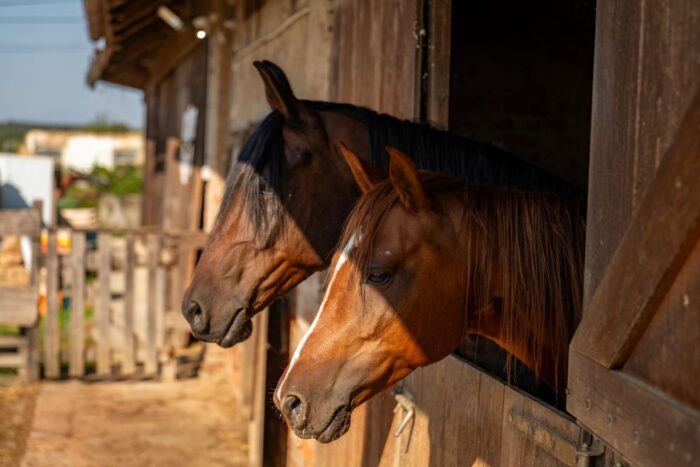
Two horses lean out from stalls in a sunlit barn aisle

Barn Etiquette for Guests: Navigating a Working Stable with Confidence

Embracing the Quiet Rhythm of Stable Life

Waking at a countryside equestrian bed and breakfast often brings a gentler kind of morning. Light settles across fields, boots rest by the door, and the first sounds may be the soft movement of horses, the creak of a stable door, or the measured footsteps of a barn hand beginning the day. For guests seeking a restorative rural escape, a working stable adds an atmosphere that feels both timeless and alive. The experience can be especially memorable when a stay combines comfortable rooms, open landscapes, and the calm presence of horses nearby.

A barn is both sanctuary and workplace, however, and its peaceful appearance can conceal a carefully coordinated routine. Horses need feeding, turnout, grooming, exercise, and health checks, often on a strict schedule. Enjoying this setting does not require riding experience or specialist knowledge. It requires observation, spatial awareness, and a willingness to follow local guidance. With a little courtesy and composure, you can move through the stable aisle confidently, share space with resident handlers, and appreciate the horses without interrupting the work that keeps them safe.

Understanding Barn Flow and Daily Farm Routines

Stable life follows a dependable cadence, although the details vary by property, season, weather, and the individual needs of each horse. Morning commonly begins with feeding and water checks, followed by turnouts into paddocks or fields. Staff may then muck stalls, refresh bedding, inspect equipment, groom horses, or prepare animals for exercise and lessons. Later in the day, horses may return from turnout, receive additional feed, and settle into their stalls before evening checks. Even a quiet-looking barn may therefore be a busy working environment.

The architecture of a stable is designed around safe movement. A broad central aisle may connect rows of stalls, while cross-ties provide a designated place for grooming or tacking up. Tack rooms contain saddles, bridles, blankets, and grooming tools, and feed rooms may hold grain, supplements, and other supplies. These areas are often private workspaces rather than visitor attractions. Ask before entering any room, opening a stall door, handling equipment, or crossing into an arena or paddock.

Hospitality in a barn is mostly a matter of timing and awareness. A friendly hello is welcome, but a handler leading a horse, carrying feed, or steering a wheelbarrow may need to concentrate. Step toward the side of the aisle, leave generous room, and wait for instructions rather than assuming that a horse will pass around you. If a wheelbarrow or cart is approaching, move clear without sudden gestures. Barn staff generally appreciate guests who are interested, polite, and attentive to directions.

  • Pause at the stable entrance and ask where guests may safely stand.
  • Keep central aisleways, stall fronts, gates, and doorways clear.
  • Never touch feed, tools, tack, or medication without permission.
  • Allow handlers to complete a task before starting a conversation.
  • Follow posted rules even when the barn appears quiet or unattended.

Decoding Equine Body Language at a Glance

Horses communicate continuously through posture, facial expression, ear position, muscle tension, and movement. The ASPCA”s horse body language guide explains that a relaxed horse may have soft eyes, relaxed facial muscles, a calm muzzle, and ears resting naturally or facing forward. A curious horse may lean toward something unfamiliar, stretch the neck, and investigate with forward ears. These signs do not guarantee that a horse wants to be touched, but they suggest a comparatively settled emotional state.

Signals calling for extra space should be taken seriously. A raised head, tense jaw, flared nostrils, exposed eye white, or ears directed sharply backward may indicate worry or defensiveness. The RSPCA”s guidance on equine behaviour also notes that a frightened horse may lean back or prepare to move away, while an angry horse may flatten its ears, turn its head, lunge, or threaten to bite. Avoid approaching from behind, particularly if the horse appears tense, because a kick can happen quickly and without much warning.

What you may notice Possible meaning Appropriate guest response
Soft eyes, loose posture, relaxed muzzle Relaxed or neutral Remain calm and ask before offering a touch
Forward ears, stretched neck, gentle investigation Curious and attentive Stand quietly and allow the horse to observe you
Raised head, tense muscles, uneven or backward ears Worried or alert Increase distance and let the handler manage the situation
Flattened ears, fixed stare, tightened mouth, turned head Defensive or angry Do not approach, touch, feed, or block the horse”s exit

Individual horses have individual personalities, so body language should always be interpreted in context. A horse resting with its head low and one hind leg relaxed may simply be dozing, while a horse that seems unusually withdrawn when awake may need attention from its regular carers. Guests do not need to diagnose behaviour. The useful habit is to notice changes, mention concerns to a host or handler, and avoid trying to solve the situation independently.

Human composure matters as well. Horses are highly attentive to movement, posture, and changes in energy. Slow breathing, relaxed shoulders, quiet footsteps, and smooth gestures are more reassuring than excited voices or hurried approaches. If a horse becomes alert, stop moving, give it room, and wait for staff guidance. Calmness is not a performance. It is simply the safest and most respectful way to share the space.

Mindful Approaches to Stall Doors and Pasture Fences

A stall front or pasture fence can feel like an inviting place to meet a horse, but every interaction should begin with permission. The horse may be sleeping, eating, recovering, or receiving training instructions. Some horses enjoy quiet contact, while others prefer to observe visitors from a distance. Hosts and barn managers know those distinctions and can tell you which animals are suitable for gentle interaction.

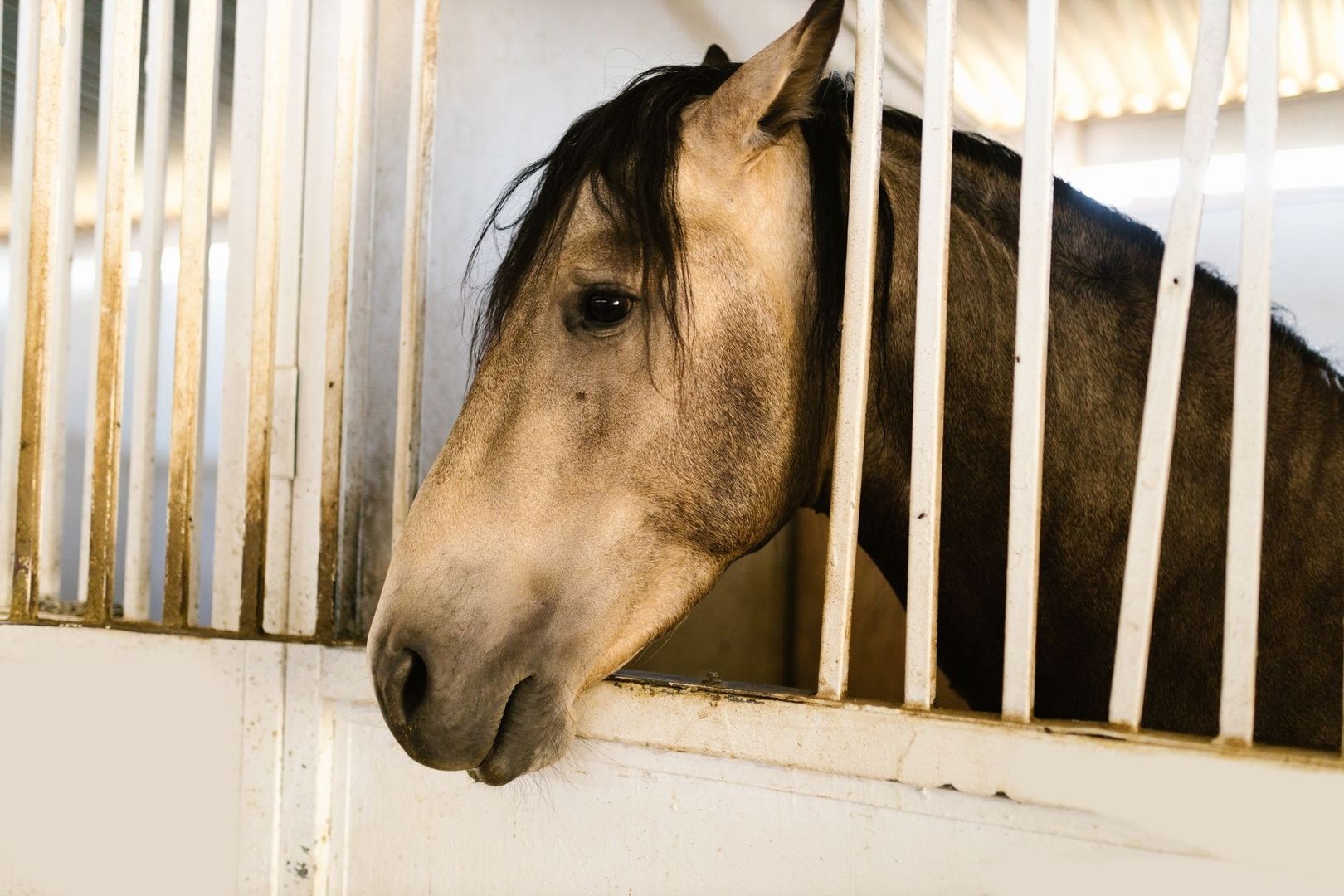
Horse looking through the bars of a stable stall door
A quiet pause at the stall gives both horse and guest time to assess one another before any interaction begins.
  1. Stop several feet away and observe the horse before approaching.
  2. Speak softly or use a gentle greeting so the horse knows where you are.
  3. Stand near the shoulder or side of the neck, never directly behind the hindquarters.
  4. Keep your movements slow and offer the back of your hand for the horse to investigate if a handler recommends it.
  5. Touch the shoulder or neck lightly rather than reaching straight toward the nose or face.
  6. Step away if the horse raises its head, tenses, pins its ears, backs away, or turns its hindquarters.

Food deserves particular caution. Treats, carrots, apples, and handfuls of feed may seem like a natural way to make friends, yet horses can have dietary restrictions, allergies, medication routines, or learned habits that make unscheduled feeding unsafe. Always coordinate treats through the bed-and-breakfast hosts or barn manager. Never offer food over a fence, through stall bars, or to a horse that is actively eating unless a responsible handler has specifically invited you to do so.

Pasture boundaries also require care. Never lean over electric fencing, climb through rails, or unlatch a gate without instruction. A horse may approach the fence quickly, and a gate can swing or become a dangerous pinch point. Keep hands, cameras, and loose clothing away from moving latches. If a gate must be opened, ask a staff member to demonstrate the correct procedure and make certain every horse is accounted for before passing through.

Sensory Etiquette for Rural Stays and Country Walks

Practical clothing makes a stable visit more comfortable without compromising a polished weekend wardrobe. Closed-toe, mud-ready footwear with secure soles is preferable to sandals, smooth fashion boots, or loose slippers. Choose fitted layers that will not catch on latches or fencing, and avoid dangling scarves, swinging handbags, and long accessories. A waterproof jacket, warm socks, and clothing suitable for changing weather can make the difference between a pleasant walk and an uncomfortable retreat indoors.

Sound and movement should be kept measured around horses, training arenas, and paddocks. Avoid shouting, running, sudden waving, and flash photography, especially when a horse is being ridden, loaded, groomed, or handled. Ask before taking close-up photographs of staff, riders, or animals, and respect requests to keep phones or cameras away. Properties differ in their visitor policies. For example, working public farms such as Ardenwood Historic Farm and Lake Metroparks Farmpark publish specific rules about animals, facilities, pets, and visitor activities, illustrating why checking local guidance matters.

  • Keep dogs leashed and well away from horses unless the property expressly permits otherwise.
  • Supervise children closely and teach them to walk, speak quietly, and ask before touching.
  • Stay on marked paths and never enter a paddock, arena, or field without permission.
  • Do not bring bicycles, scooters, drones, or other noisy equipment into stable areas unless approved.
  • Close gates and leave fences, signs, tools, and historic features exactly as found.

These simple choices preserve the atmosphere that makes a rural stay so appealing. A stable is not merely scenery for a photograph. It is a home for animals and a workplace for people, often connected to generations of agricultural and equestrian heritage. Quiet observation allows guests to notice the small details: the rhythm of hay being placed, the soft swish of a tail, the changing light across a paddock, and the unhurried precision of familiar chores.

Savoring Meaningful Moments in Countryside Stables

Thoughtful etiquette transforms a visit to a working stable from a passive sightseeing stop into a more meaningful countryside experience. By watching before approaching, leaving clear paths, following staff instructions, and respecting each horse”s personal space, guests can enjoy the atmosphere without adding pressure to the daily routine. The result is a stay that feels both comfortable and connected to the land.

Slow down and let the stable reveal itself at its own pace. Notice the gentle cadence of feeding, grooming, turnout, and evening checks, while appreciating the pastoral heritage that continues through ordinary work. With warmth, curiosity, and renewed confidence, you can step into the stable aisle knowing that considerate behaviour is the most valuable form of equestrian etiquette.

The Role of Local Art in Creating a Memorable B&B Experience

There’s a certain magic that transforms a simple bed and breakfast stay from a comfortable night’s sleep into a cherished memory. As someone who has not only frequented countless B&Bs across continents but now pours my heart into running Oak Hills Stables, I’ve come to believe that this magic often lies in the details, and increasingly, in the art that adorns our walls and spaces. We’re moving beyond generic, mass-produced prints. Today, savvy B&B owners understand that incorporating local art is not just about aesthetics; it’s about storytelling, creating connections, and offering an experience that resonates deeply with guests long after they’ve departed. It”s about infusing your establishment with a soul, a personality that is uniquely tied to its surroundings, offering a genuine slice of the local culture and supporting the creative community that brings it to life.

The heartbeat of authenticity connecting guests to place and culture

Local art serves as a vibrant storyteller, offering guests an intimate narrative of the region’s unique identity, its history, and its contemporary spirit. When a guest walks into a B&B and is greeted by a piece of art crafted by a neighborhood artist, or a sculpture that reflects local lore, they are instantly offered a more genuine glimpse into the local way of life. This moves far beyond superficial tourism, inviting a deeper engagement with the destination. Establishments like Hotel McCoy have beautifully embraced this, using local, authentic, and carefully selected art to embody the community’s spirit and create an authentic, non-generic atmosphere. They even run a provisions-free art program where local artists can exhibit and sell their work, with 100% of the proceeds going directly to the artist. It”s this authenticity that transforms a B&B from a mere place to stay into a portal to the local culture, making the experience richer and more meaningful.

Meeting the traveler’s demand for authentic cultural immersion

The modern traveler, I’ve observed, is increasingly on a quest for these authentic experiences. They crave more than just a picturesque view; they want to feel connected to the places they visit. This growing desire for cultural immersion is well-documented; for example, insights from a 2023 Booking.com survey reveal that a significant 75% of travelers are actively seeking experiences that represent the local culture. Local art is a powerful and immediate way to meet this demand. By curating pieces that speak of the area’s heritage or current creative pulse, a B&B can become a destination in itself, offering a unique cultural immersion that standard hotels often miss. This approach not only satisfies the guest’s desire for authenticity but also enriches their overall travel narrative, providing them with stories and memories to take home.

Cultivating a ‘sense of place’ through art

This concept of creating a ‘sense of place’ is paramount. Art reflecting local culture, history, or landscape provides guests with an authentic taste of the destination”s unique charm. It”s about making your B&B an extension of the locale, not an isolated entity. When art is thoughtfully chosen, it helps guests feel a more profound connection to the place they are visiting, turning their stay into a more meaningful and memorable event. This deepens their appreciation not just for your B&B, but for the entire community they are exploring. A well-curated art collection, especially one focusing on local artists or themes, can become a signature that guests remember, contributing to the B&B’s unique identity and brand.

Beyond aesthetics the emotional and economic ripple effects of local art

Evoking emotion and enhancing ambiance

The impact of art extends far beyond its visual appeal; it touches us on an emotional level. A thoughtfully chosen piece can transform the ambiance of a room, evoking feelings of warmth, curiosity, or tranquility. I’ve seen how a vibrant painting can energize a common space, or a serene sculpture can create a pocket of calm in a bustling B&B. As noted in resources discussing the value of art, being surrounded by unique, non-mass-produced art can even have therapeutic benefits, such as reducing stress and stimulating creative thinking for guests. Art has the power to lift moods and make guests feel comfortable and welcome, which is the cornerstone of true hospitality. This emotional resonance is key to creating those lasting, positive memories we strive for.

Fostering community and economic support

Moreover, embracing local art creates a wonderful, positive ripple effect that benefits the wider community. When a B&B chooses to display and perhaps even facilitate the sale of works by local artists, it becomes an active patron of the arts. This direct support, as highlighted by sources like ArtBase, bolsters the local economy, fosters community pride, and provides invaluable exposure for talented individuals. It’s a symbiotic relationship: artists gain a platform, and the B&B gains unique, meaningful decor that tells a story. Local art infuses a space with cultural warmth and a sense of community solidarity, making it easier for guests to connect with the local environment. This commitment to local talent often resonates strongly with guests who appreciate businesses that invest in their communities.

Creating a unique selling proposition

In an increasingly competitive market, local art can also serve as a powerful unique selling proposition. It”s a way to differentiate your B&B, to give it a distinct personality that stands out. In an age where travelers have countless options, showcasing what makes your establishment unique is crucial. Local art helps tell your B&B”s story and visibly demonstrates your values, such as a commitment to community and authenticity. This can be particularly appealing to guests looking for more than just a bed for the night; they’re seeking an experience with character and depth. A striking piece of local art in the entryway can create an immediate, memorable first impression, setting the tone for a special stay.

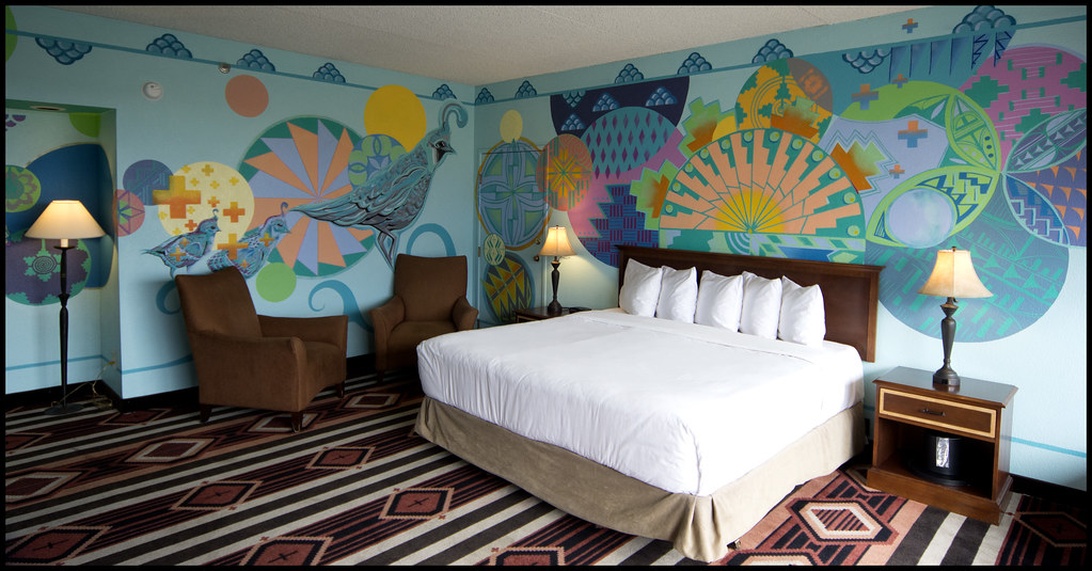
A boutique hotel guest room featuring a striking, vibrant wall mural with colorful artistic designs including birds and geometric patterns. The room includes a king-sized bed with white linens, brown armchairs, and a patterned carpet. The local artwork creates a unique, immersive experience that defines the boutique concept.

A guest room transformed by a vibrant local mural, showcasing how art creates an immersive and unique boutique experience. This kind of distinctive artwork, perhaps featuring local flora or scenes, turns a simple room into a memorable space.

Imagine a guest room transformed by a vibrant mural depicting local flora, like the one pictured above, or a cozy reading nook made special by a handcrafted ceramic piece. These aren’t just decorative touches; they are conversation starters and memory makers. The careful selection and placement of such pieces demonstrate an attention to detail that guests truly appreciate, making their experience feel more curated and personal.

Curating the experience practical ways to integrate local art

Integrating local art into your B&B doesn’t have to be an overwhelming task; it’s an exciting creative process. Strategies can range from displaying individual paintings or photographs in guest rooms to commissioning a large-scale mural for a common area or even the exterior of your building. The key is thoughtful curation that aligns with your B&B’s unique identity and the story you want to tell. Considering the scale, medium, and placement of art is crucial for how it interacts with the environment and contributes to the overall guest experience. The goal is to create a cohesive and immersive atmosphere where the art feels like an integral part of the B&B”s fabric, not an afterthought.

Collaboration is often at the heart of a successful local art program. Consider partnering directly with local artists. This could involve hosting rotating exhibitions, offering your spaces for artists to display their work on a commission-free basis (a wonderfully supportive model where artists keep 100% of sales), or even offering short-term artist residencies. Such initiatives not only provide fresh and evolving artwork for your guests to enjoy but also position your B&B as a dynamic cultural hub within the community. To further foster this sense of community and streamline collaborations, especially if working with multiple artists or organizing frequent art-related events, B&B owners can significantly benefit from understanding how a social intranet empowers modern workplaces. Such platforms can inspire innovative ideas for managing artist networks, sharing exhibition schedules, or even co-creating promotional materials, thereby enhancing the B&B’s role as a cultural hub and fostering a sense of discovery for guests alongside genuine support for the arts.

And why stop at wall art? The concept of ‘local art’ can be wonderfully broad. Think about incorporating locally crafted furniture, unique textiles woven by regional artisans, or distinctive pottery for serving breakfast. You can also extend the art experience beyond your B&B’s walls by actively promoting local art events, galleries, and studios. For instance, informing guests about local fine art festivals can significantly enrich their visit. Some tourism bodies even suggest the possibility of artist-led walks or workshops where guests can create their own art, resulting in a tangible souvenir and a deeply personal memory of their stay. These interactive elements can transform passive appreciation into active engagement.

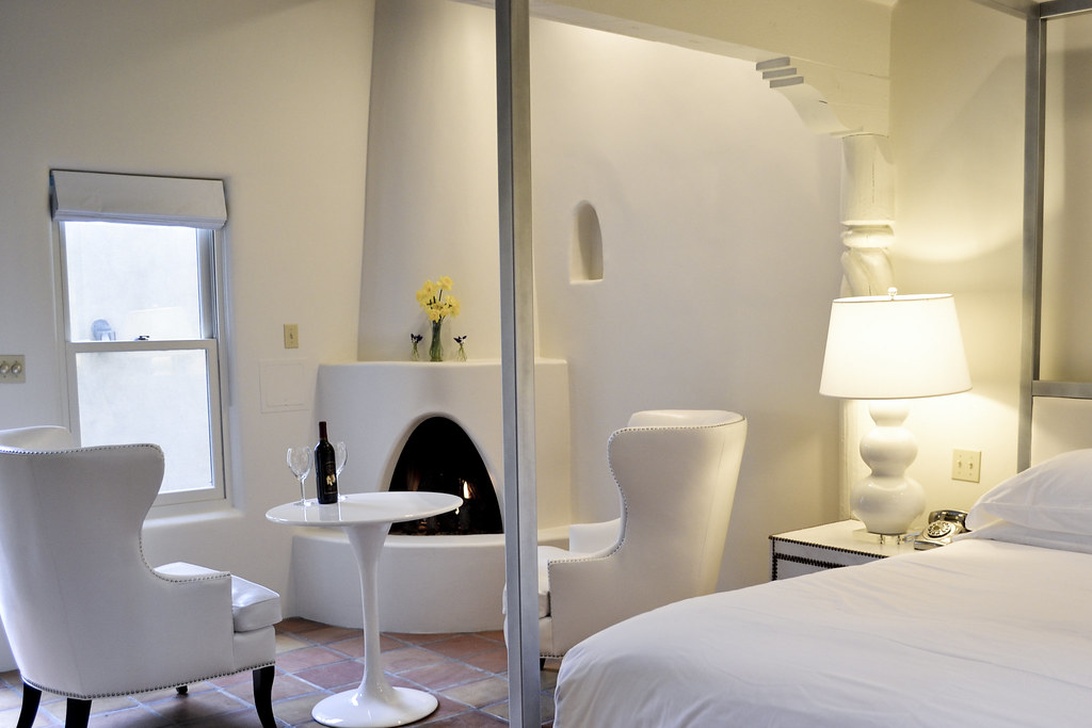
An elegant boutique hotel room with a minimalist white color scheme featuring a traditional kiva-style fireplace, likely reflecting local Southwestern or adobe architectural influences. The space includes stylish white wingback chairs, a small round table, and contemporary furnishings that blend modern design with regional elements.

A minimalist room featuring a traditional kiva-style fireplace, an example of how local architectural elements like this distinctive Southwestern corner fireplace often found in adobe homes, can serve as art.

Even architectural elements, like a traditional kiva-style fireplace (a distinctive Southwestern corner fireplace, often built into a corner and typically found in adobe or Pueblo-revival architecture), can be a form of local artistry, connecting the space deeply to its cultural roots and enhancing that sought-after sense of place. It”s about creating an environment where every detail contributes to a cohesive and authentic narrative, as seen in the room above where the fireplace becomes a focal point of regional design.

Making art accessible and engaging

Sometimes, the most delightful artistic touches are found in unexpected places. Incorporating creative illustrations by local talents on guest key cards, welcome notes, or even coasters can provide an immediate and charming introduction to the local culture. These small, accessible pieces of art become delightful little takeaways, subtle reminders of the unique character of your B&B and the region. It shows a level of thoughtfulness that guests often remember.

To truly enhance the guest’s connection with the art, consider providing a little context. A small card next to a piece identifying the artist and perhaps a brief note about their inspiration, or a curated art guide for your B&B, can significantly deepen appreciation. This storytelling element transforms the art from mere decoration into a point of connection and learning. When guests understand the story behind the art, the experience becomes richer and more personal, helping to convey cultural identity and connect them to local history.

The enduring impression why art infused B&Bs resonate deeply

Ultimately, the integration of local art can elevate a bed and breakfast from simply providing accommodation to offering a genuine cultural destination. It’s about creating an environment that stimulates the senses and the mind, offering a more stimulating experience that provides a sense of place and individuality. The memories guests take away from such unique, artful environments are often more vivid and cherished precisely because they are tied to these distinct visual and cultural encounters. These are the kinds of details that spark conversations and inspire return visits.

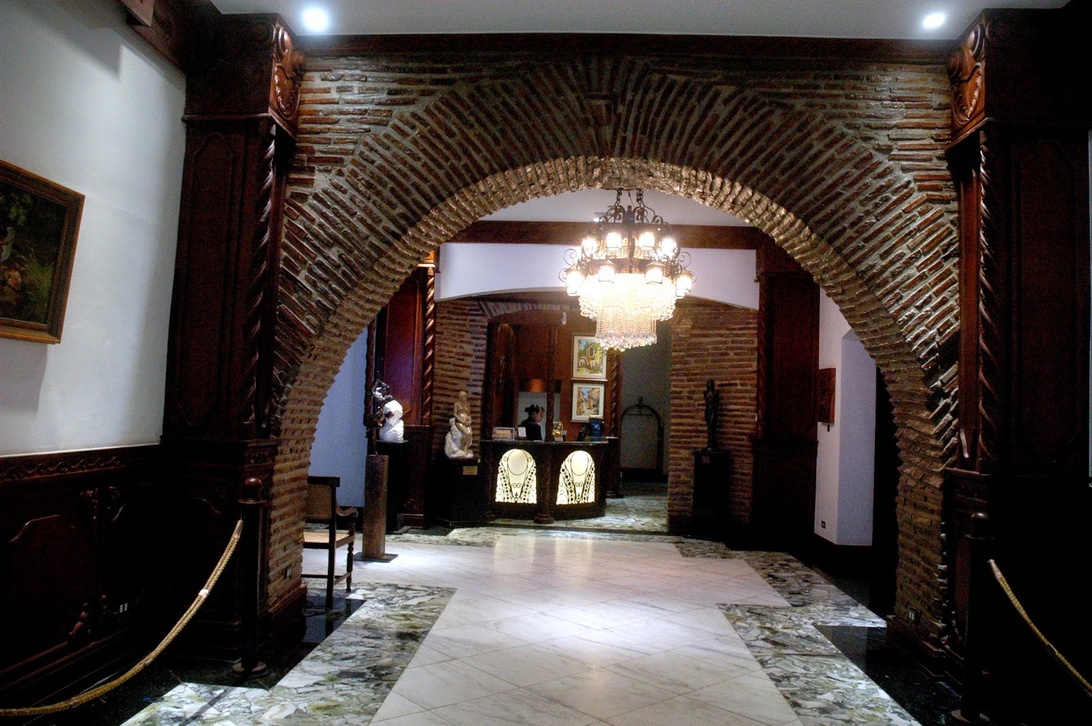
The presence of thoughtfully selected local art plays a significant role in building your B&B’s brand and reputation, reflecting values that resonate with many modern travelers. Authentic artwork can enhance the perceived quality of the stay and foster a deeper connection, potentially leading to guest loyalty and enthusiastic word-of-mouth recommendations. In essence, the art becomes part of your B&B”s identity, a signature element that guests remember and share. The ambiance of shared spaces, such as an inviting hotel entrance with its unique architectural features and carefully chosen artwork, often sets the first artistic impression and welcomes guests into the B&B’s story.

An interior view of what appears to be a boutique hotel entrance or lobby featuring a large brick archway, marble flooring, wooden accents, and a reception desk visible in the background. The space has traditional architectural elements including a chandelier and some framed artwork hanging on the walls.

An inviting B&B lobby with a distinctive brick archway, marble flooring, and local artwork demonstrates how entrances can immediately set an artistic and welcoming tone.

Investing in local art, therefore, is far more than a decorative choice; it’s an investment in the very soul of your bed and breakfast and in the richness of the experience you offer. It”s about weaving a unique tapestry of stories, colors, and textures that not only beautify your space but also create a profound and lasting connection with every guest who walks through your door. It”s this thoughtful curation, this celebration of local creativity, that truly transforms a stay into an unforgettable journey.

How to Create a Sustainable Bed and Breakfast Experience

As environmental awareness increases, travelers are actively seeking accommodations that align with their values. For Bed and Breakfast (B&B) owners, this presents a significant opportunity to reduce environmental impact and attract a growing market of eco-conscious guests. Creating a sustainable B&B involves integrating environmental responsibility into all aspects of operation, from energy consumption and waste management to sourcing and guest communication.

Foundational Principles of B&B Sustainability

Sustainability in the B&B sector is built upon three pillars: environmental, social, and economic sustainability. Environmental sustainability focuses on minimizing negative impacts by reducing emissions, conserving resources, and protecting biodiversity. Social sustainability involves contributing positively to the local community, respecting cultural heritage, and fostering a fair and inclusive work environment. Economic sustainability entails running a profitable business that benefits the local economy and creates long-term value. Sustainable tourism is not merely a trend, but a necessary approach to address environmental and social challenges, as emphasized by Octorate.com.

Implementing Greener Operations

Transforming a B&B into a sustainable operation requires a comprehensive approach and specific actions. Key areas to focus on include:

Enhancing Energy Efficiency

Energy consumption is a major environmental concern for B&Bs. Simple yet effective measures include switching to LED lighting, installing energy-efficient appliances, and utilizing motion-sensor lighting. As noted by CBiz, LED lights produce significantly less heat than traditional bulbs, reducing energy use and fire risk. A more substantial step is investing in renewable energy, like solar panels. Many B&Bs, such as those highlighted by the Puerto Rico Bed & Breakfast Association, have successfully used solar panels to lessen their reliance on fossil fuels. For example, A 2 Tiempos Bed & Breakfast installed a system handling 5.2 kW of their electricity use, while 4 Casitas Bed & Breakfast boasts a hybrid system with solar panels and a wind turbine, achieving complete off-grid operation. Casa Sol Bed & Breakfast also uses solar panels and solar water heaters. Rainforest Inn has an ambitious project with 52 solar panels and Tesla Powerwall batteries, designed to cover 100% of the inn”s electricity needs. Programmable thermostats can also optimize heating and cooling, and proper insulation minimizes energy loss.

Advanced Energy Solutions

Beyond solar, consider heat pumps as energy-efficient alternatives to furnaces and air conditioners. Smart thermostats, offer remote temperature control and can learn occupancy patterns to optimize energy use. Energy recovery ventilation systems can improve indoor air quality while minimizing energy loss. Another innovative approach is demonstrated by the ‘Cow Power’ program highlighted by Cabot Creamery, where farms use biodigesters to convert manure into energy.

Strategies for Water Conservation

Reducing water consumption is essential. Installing low-flow showerheads and toilets, encouraging guests to reuse towels, and considering rainwater harvesting for irrigation are effective strategies. Offering guests the option to forgo daily towel and linen changes, as mentioned by Little Hotelier, can significantly reduce water usage. Daly’s House B&B exemplifies water-saving through updated bathroom equipment, water-saving nozzles, and a towel reuse program, as detailed on their website.

Implementing Water-Saving Measures

Installing low-flow showerheads is a relatively straightforward project. Look for models with the WaterSense label, ensuring they meet EPA water-efficiency criteria. Dual-flush toilets also offer significant water savings. For rainwater harvesting, consider a simple rain barrel or a more elaborate system with filtration, depending on your needs. B&B Ancora del Chianti uses rainwater collected in a century-old cistern for irrigation, demonstrating a commitment to water resourcefulness, as described in their sustainability practices.

Waste Management and Recycling Initiatives

Minimize waste by eliminating single-use items, providing refillable toiletries, and implementing a comprehensive recycling system. The Ness Guest House exemplifies waste reduction by pre-ordering breakfast to minimize food waste and using glass bottles instead of plastic. Composting food scraps and garden waste reduces waste and creates valuable soil. Provide clearly labeled recycling bins and educate guests about your program. Idlwilde Inn showcases a commitment to local and seasonal sourcing, purchasing ingredients from nearby farms and markets, reducing transportation and supporting local agriculture, details can be found on their website.

Advanced Waste Reduction

Consider partnering with local organizations to donate leftover food or toiletries. Explore recycling options beyond standard materials, like textiles or electronics. Some B&Bs, like Ancora del Chianti, even use herbal wastewater purification systems. They also joined the ‘Wasteless in Chianti’ project, using refillable soap dispensers and self-service breakfast containers to reduce packaging.

Sustainable Sourcing and Local Partnerships

Prioritize purchasing local and organic products. This reduces emissions, supports the local economy, and provides guests with an authentic experience. Amazon B&B excels in supporting the local community, prioritizing local purchases, and aiding micro-entrepreneurs. They also encourage donations to support local groups and provide facilities for events and training. Build relationships with local farmers, artisans, and businesses for a mutually beneficial network.

Identifying Local Suppliers

Visit farmers’ markets and local food events to connect with suppliers. Contact your local chamber of commerce or tourism board for information on local businesses. Consider joining a local food cooperative or farm-to-table network. Hotel Casa Palmela exemplifies local engagement by favoring small businesses in the region, such as local bakeries and artisans.

Engaging Guests and Communicating Efforts

Inform guests about your sustainability initiatives and encourage their participation. This can be achieved through clear information in rooms, on your website, and in personal communication. Involving guests creates shared responsibility and raises awareness. Providing information about local, sustainable activities enhances their experience.

Farm-to-Table and Unique Experiences

Offering a “farm-to-table” breakfast with local and seasonal ingredients combines sustainability with a unique guest experience. The Inn on Lake Champlain grows its own vegetables and uses local ingredients. Offering nature-related activities, like guided tours, enriches the guest experience and promotes sustainability. LePack suggests offering guests bicycles to explore the surroundings, promoting sustainable transport.

Sustainability as a Wise Investment

Investing in sustainability is both ethical and profitable. Reducing energy, water, and waste lowers operating costs. A strong sustainability profile attracts environmentally conscious travelers willing to pay more for responsible experiences. Transparent communication of your efforts is key to attracting these guests. Les Mazures is a great example, being certified with the Green Key-märkningen.

Certifications and Recognition

Obtaining sustainability certifications validates your efforts and enhances credibility. Certifications for the hospitality industry include Green Key, LEED (Leadership in Energy and Environmental Design), and B Corp Certification. The certification process typically involves assessing operations against sustainability criteria. Displaying your certification on your website and marketing materials attracts eco-conscious travelers.

Measuring and Reporting Sustainability Efforts

To ensure the effectiveness of your sustainability initiatives, it’s crucial to measure and report on your progress. Key Performance Indicators (KPIs) relevant to B&Bs include: Energy consumption per guest (kWh/guest night), Water usage per guest (liters/guest night), Waste generation per guest (kg/guest night), Percentage of waste recycled (%), Percentage of locally sourced food and supplies (%), Guest satisfaction with sustainability initiatives (score on a scale), and Carbon footprint (kg CO2e/guest night). Regularly track these KPIs and use them to identify areas for improvement. Consider publishing an annual sustainability report to communicate your progress to guests and stakeholders.

The Future of Sustainable B&Bs

Creating a sustainable B&B is a continuous journey of improvement and adaptation. By embracing sustainability, B&B owners contribute to a better future and create a more meaningful experience for guests. The B&Bs of the future are green, responsible, and deeply connected to their local communities.

Five Ways to Spruce up a Bed & Breakfast with Plants

Bed and breakfast owners entice customers to return to comfortable surroundings and scrumptious food choices. The decor is the icing on the cake, with plants playing a major role in how an establishment looks and feels. Not even online room booking applications can curb consumer demand for traditional bed and breakfast accommodations. In America, more than 20,000 bed and breakfast owners are fueling a nearly five-billion-dollar market. Here are five ways bed and breakfast managers use Getplanta.com to improve the atmosphere and fuel consumer demand.

Exotic

Exotic plants have a wealth of benefits, such as air filtering and stress reduction. However, it’s the beauty that leaves visitors in awe. From the butterfly plant with its distinctive triangle leaves to the royal coral, hanging down from its cactus-like base, exotic plants enhance the bed and breakfast atmosphere. By providing natural elegance and unique appearances, these plants create an ambiance, which helps to improve the visitor’s mood.

Mood

Scientists have documented a plant’s ability to improve mood. Reasons for the mood alteration varies, depending on the plant. For instance, the Aloe plant removes air pollution and releases oxygen into the atmosphere, helping a bed and breakfast visitor to enjoy a peaceful night of sleep. Better sleep improves a person’s mood. In fact, the Peace Lilly and the Ivy are also air filtering plants, allowing those in the surrounding area to breathe easier. Clean air is not the only reason plants are beneficial to bed and breakfast businesses, calming aroma’s also help to improve the mood.

Aromatic

The Lavender plant’s aroma is known for lowering the heart rate during stress. For years, its been used as an aromatherapy treatment, helping to ease labor, prevent sleeplessness, eliminate headaches, and relieve tension. The smell of fresh basil leaves are also known to eliminate stress, giving bed and breakfast visitors a beautiful scent to enjoy while relaxing on holiday or touring a new city for the first time.

Colorful

Plants come in a variety of colors, matching any décor. An interior designer may use plants as art in complementing furnishings and accents within the bed and breakfast. From deep greens to vibrant reds, colors help stimulate the senses, giving B&B visitors great scenery to enjoy. In fact, owners maximize visual impact with attention-getting, stress-relieving, mood-boosting plants to ensure consumers return to visit the vibrant plant-filled atmosphere.

Environment

Plants emit oxygen, helping to create a better living environment. In addition, the natural beauty helps to soothe the senses, improving a visitor’s mood. The visual stimulation promotes feelings of happiness and security. Plants also increase compassion, which improves relationships. For these reasons, a plant-filled room is a great atmosphere, especially when vacationing with others at a bed and breakfast.

Bed and Breakfast Decors

Anyone who sets up a bed and breakfast business will probably consider the interior décor of their establishment and try to create a cohesive theme throughout. This helps guests to relax in their new environment. What sort of styles could B&B owners create to keep their guests happy?

Types of Décor

Interior décor can broadly be broken down into two main types: traditional and contemporary. The former might encompass long-established styles such as art deco or art nouveau, where the fixtures and fittings have distinctive geometric shapes or late 19th century nature themes.

A traditional style tends to include more ‘stuff’ than modern styles, which are usually minimalistic with clean lines. The age and look of the furniture will lean towards one or the other, too, with modern furniture tending to be more functional, sharper and less ornate.

In addition to traditional and contemporary, of course you also have the eclectic style of interior décor. Rooms are likely to include a motley collection of items if they’re eclectic, but if it’s done well, those items won’t necessarily look out of place together.

Getting Creative

It can be fun to add a personal touch to interior décor by getting creative. Potential projects for owners of accommodation include stencilling walls, making chair back covers or painting old pieces of furniture.

You can also jazz up shop-bought furniture by mixing and matching with third-party products. On IKEA Karlstad sofas, for instance, Ikea Karlstad sofa covers look great, and anything that makes furniture look more individualized is a good thing.

Special Themes & Relaxing Colors

B&B owners often choose a theme they enjoy to decorate their accommodation with. If it’s artists, they might have a Monet room or a Van Gogh room. Or in a literary place it could be a Keats room and a Shelley room. A few related items typically decorate the room.

If a B&B is right on the coast, it’s sometimes a good idea to extend the coastal feel into the room, so there’ll be light blue, sandy tans or off-white colors and tactile furniture with complementary beach-like textures.

Relaxing hues are generally a good idea in B&B rooms, rather than fiery reds or fussy patterns that jar the vision of guests and give color to their nightmares.

Fitness Breaks and Bed and Breakfasts

Bed and breakfast accommodation is the perfect choice for those who like their home comforts. Although not luxury hotels, these establishments will provide everything you need to make your break that little bit special. Expect delicious home-cooked food as well as comfortable beds and facilities such as free car parking and Wi-Fi. Often set in people’s homes, you can get a sense of how the locals in your chosen area live. You also share their home for a short period of time, which can often be interesting in itself.

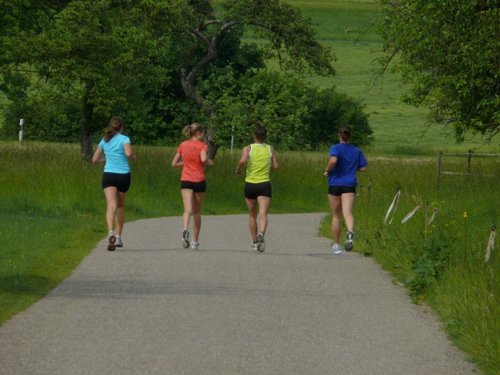
Best of all they are much cheaper than hotels which means you can have more money to spend on your chosen vacation activity. If you are health conscious or a keep fit enthusiast, the bed and breakfasts can offer the perfect base from which to explore the local surroundings. Whether you are a keen cyclist, an ardent jogger, an enthusiastic hiker, or a kayaker, then bed and breakfast sites could be just what you are looking for. Similarly, a company called Aim’n can provide you with suitable sports clothing for all your fitness needs.

What is Aim’n?

Aim’n is an online company that specializes in providing comfortable yet functional sportswear for any sporting or keep-fit function. The company designs its own range of sports apparel, and they focus on clothing made by women for women. They offer everything from leggings and tights to tee-shirts, hoodies, and sportswear for all occasions. So whatever you wish to do during your bargain fitness break in a B&B, they will have something to suit you.

For example, they provide an extensive range of leggings and tights featuring trendy designs, the latest styles, and ultimate comfort and fit. Available with environmental motifs or as plain material in many different styles and colors, they are perfect for jogging, work-outs, or yoga. Their versatility makes them suitable for all forms of physical exercise. Made from polyester and elastane, their leggings feature high breathability, which allows sweat to escape via the fabric avoiding unsightly marks during exercise.

Summary

Bed and breakfast lodgings are the perfect choice for those who want a value-for-money place to stay while on their sporting holiday. Aim’n clothing is designed to be comfortable yet fashionable so that you will always look good even in the middle of a long run or hike. Once you have found your desired location check out the local tourist board site who is bound to have a list of suitable B&B establishments. And, don’t forget, Aim’n offers desirable, practical sportswear that will make you look and feel good while pursuing your favorite fitness regime.

What Miss If You Skip the B&B Stay

A Bed and Breakfast facility offers you the care and attention you deserve. From sleeping in unique rooms to a great value for your money, here is what you will be missing if you skip B&B.

Personalized Chef

Have you tasted food prepared by a professional culinarian? If you stayed at B&B house, a trained chef could spoil you with international cuisines.

Bigger Bang For Your Buck

Forget a hotel where you may not find reliable parking that often costs too much. Not to mention, you pay for other things like snacks and the internet in a regular hotel. But the value you get for your bucks at a guesthouse is greater than hotel stay. Apart from a comfortable room, you will have free Wi-Fi, parking, and discounts on local attractions. Some B&B facilities offer fresh cookies, free DVDs, and wine for free.

Homemade Breakfast

Craving for a mouthwatering pastry and vegetable side plates? You are sure to get a meal close to what you make at home or even better while staying at a B&B inn.

A Quick Staycation

Have you been planning a getaway but hardly get enough time? A night at B&B can give you the relaxation you just need if you don”t want to spend too much on flight tickets and accommodation.

Unique Rooms

Rooms at B&B are designed with unique character. Expect a unique feel of each room”s interior décor. Choose a theme that matches your mood. You might even get lucky to have a learning opportunity like history and gardening. Some inns date back centuries ago and were once homes to royal families.

The Bed and Breakfast lifestyle is more than just a comfy lodging. Unlike a typical hotel, B&B services perceive you as a guest rather than a mere customer. Get away from the loud highways and bring your family and pets to a B&B if you want to have fun together.

Three Common Industries That May Surprise You

Many industries have a lot in common, which is to be expected. But, then there are some who have a lot in common that may be unexpected. The following outlines what these are.

Bed and Breakfasts

This is a booming industry that has a lot of influence on those that use the services that this form of accommodation provides.

The Arts

This is a popular industry that has a lot of different categories to it. Included in these are the art prints.

Education

Another important industry that is a life changer for all those who have been involved in some form of education which is available on many different platforms.

These three industries have a lot in common because they can be combined together to influence those that use them. Here is an example.

Art Prints

One form of art that can be enjoyed is art prints that are comprised of a variety of different themes. There are many different themes that are used for the creation of this type of art. It can range from being prints that are abstract to those that have captured the essence of nature.

  • How can they be integrated with bed & breakfasts?

These types of establishments have to provide a warm and inviting environment for their guests. One of the least expensive but most effective ways of doing this is by having a collection of different forms of arts on display in each of the rooms that will be used by their guests. Rather than having to invest in expensive pieces of art, they can purchase affordable art prints that are of good quality and themed to fit in with the environment of the bed & breakfast.

  • How can art prints contribute to education?

This is one of the many benefits of art prints that often gets overlooked. Art, in itself, can be an educational tool. The artists who create these prints can use them as an educational tool. Those who get to view these can learn a lot from them.

The art print artist who focuses on creating pieces based on places they visit can provide a lot of information to those who get to view these pieces. They can learn what a region is like just from the print itself. It can create awareness without the viewer having to visit the area themselves.

Even abstract prints can offer a lesson. Viewers get to appreciate the use of colors, and it educates them as to how colors can be used in an array of different ways.

Then, of course, there are the many valuable lessons that can be learned from prints that have been created by the artist’s view of nature. This is a wonderful form of education that even children can take great advantage of.

By knowing how these three industries can come together, it creates a greater appreciation of each of them. It also encourages people to think outside of the box and to become more aware of their surroundings.