
Embracing the Quiet Rhythm of Stable Life
Waking at a countryside equestrian bed and breakfast often brings a gentler kind of morning. Light settles across fields, boots rest by the door, and the first sounds may be the soft movement of horses, the creak of a stable door, or the measured footsteps of a barn hand beginning the day. For guests seeking a restorative rural escape, a working stable adds an atmosphere that feels both timeless and alive. The experience can be especially memorable when a stay combines comfortable rooms, open landscapes, and the calm presence of horses nearby.
A barn is both sanctuary and workplace, however, and its peaceful appearance can conceal a carefully coordinated routine. Horses need feeding, turnout, grooming, exercise, and health checks, often on a strict schedule. Enjoying this setting does not require riding experience or specialist knowledge. It requires observation, spatial awareness, and a willingness to follow local guidance. With a little courtesy and composure, you can move through the stable aisle confidently, share space with resident handlers, and appreciate the horses without interrupting the work that keeps them safe.
Understanding Barn Flow and Daily Farm Routines
Stable life follows a dependable cadence, although the details vary by property, season, weather, and the individual needs of each horse. Morning commonly begins with feeding and water checks, followed by turnouts into paddocks or fields. Staff may then muck stalls, refresh bedding, inspect equipment, groom horses, or prepare animals for exercise and lessons. Later in the day, horses may return from turnout, receive additional feed, and settle into their stalls before evening checks. Even a quiet-looking barn may therefore be a busy working environment.
The architecture of a stable is designed around safe movement. A broad central aisle may connect rows of stalls, while cross-ties provide a designated place for grooming or tacking up. Tack rooms contain saddles, bridles, blankets, and grooming tools, and feed rooms may hold grain, supplements, and other supplies. These areas are often private workspaces rather than visitor attractions. Ask before entering any room, opening a stall door, handling equipment, or crossing into an arena or paddock.
Hospitality in a barn is mostly a matter of timing and awareness. A friendly hello is welcome, but a handler leading a horse, carrying feed, or steering a wheelbarrow may need to concentrate. Step toward the side of the aisle, leave generous room, and wait for instructions rather than assuming that a horse will pass around you. If a wheelbarrow or cart is approaching, move clear without sudden gestures. Barn staff generally appreciate guests who are interested, polite, and attentive to directions.
- Pause at the stable entrance and ask where guests may safely stand.
- Keep central aisleways, stall fronts, gates, and doorways clear.
- Never touch feed, tools, tack, or medication without permission.
- Allow handlers to complete a task before starting a conversation.
- Follow posted rules even when the barn appears quiet or unattended.
Decoding Equine Body Language at a Glance
Horses communicate continuously through posture, facial expression, ear position, muscle tension, and movement. The ASPCA”s horse body language guide explains that a relaxed horse may have soft eyes, relaxed facial muscles, a calm muzzle, and ears resting naturally or facing forward. A curious horse may lean toward something unfamiliar, stretch the neck, and investigate with forward ears. These signs do not guarantee that a horse wants to be touched, but they suggest a comparatively settled emotional state.
Signals calling for extra space should be taken seriously. A raised head, tense jaw, flared nostrils, exposed eye white, or ears directed sharply backward may indicate worry or defensiveness. The RSPCA”s guidance on equine behaviour also notes that a frightened horse may lean back or prepare to move away, while an angry horse may flatten its ears, turn its head, lunge, or threaten to bite. Avoid approaching from behind, particularly if the horse appears tense, because a kick can happen quickly and without much warning.
| What you may notice | Possible meaning | Appropriate guest response |
|---|---|---|
| Soft eyes, loose posture, relaxed muzzle | Relaxed or neutral | Remain calm and ask before offering a touch |
| Forward ears, stretched neck, gentle investigation | Curious and attentive | Stand quietly and allow the horse to observe you |
| Raised head, tense muscles, uneven or backward ears | Worried or alert | Increase distance and let the handler manage the situation |
| Flattened ears, fixed stare, tightened mouth, turned head | Defensive or angry | Do not approach, touch, feed, or block the horse”s exit |
Individual horses have individual personalities, so body language should always be interpreted in context. A horse resting with its head low and one hind leg relaxed may simply be dozing, while a horse that seems unusually withdrawn when awake may need attention from its regular carers. Guests do not need to diagnose behaviour. The useful habit is to notice changes, mention concerns to a host or handler, and avoid trying to solve the situation independently.
Human composure matters as well. Horses are highly attentive to movement, posture, and changes in energy. Slow breathing, relaxed shoulders, quiet footsteps, and smooth gestures are more reassuring than excited voices or hurried approaches. If a horse becomes alert, stop moving, give it room, and wait for staff guidance. Calmness is not a performance. It is simply the safest and most respectful way to share the space.
Mindful Approaches to Stall Doors and Pasture Fences
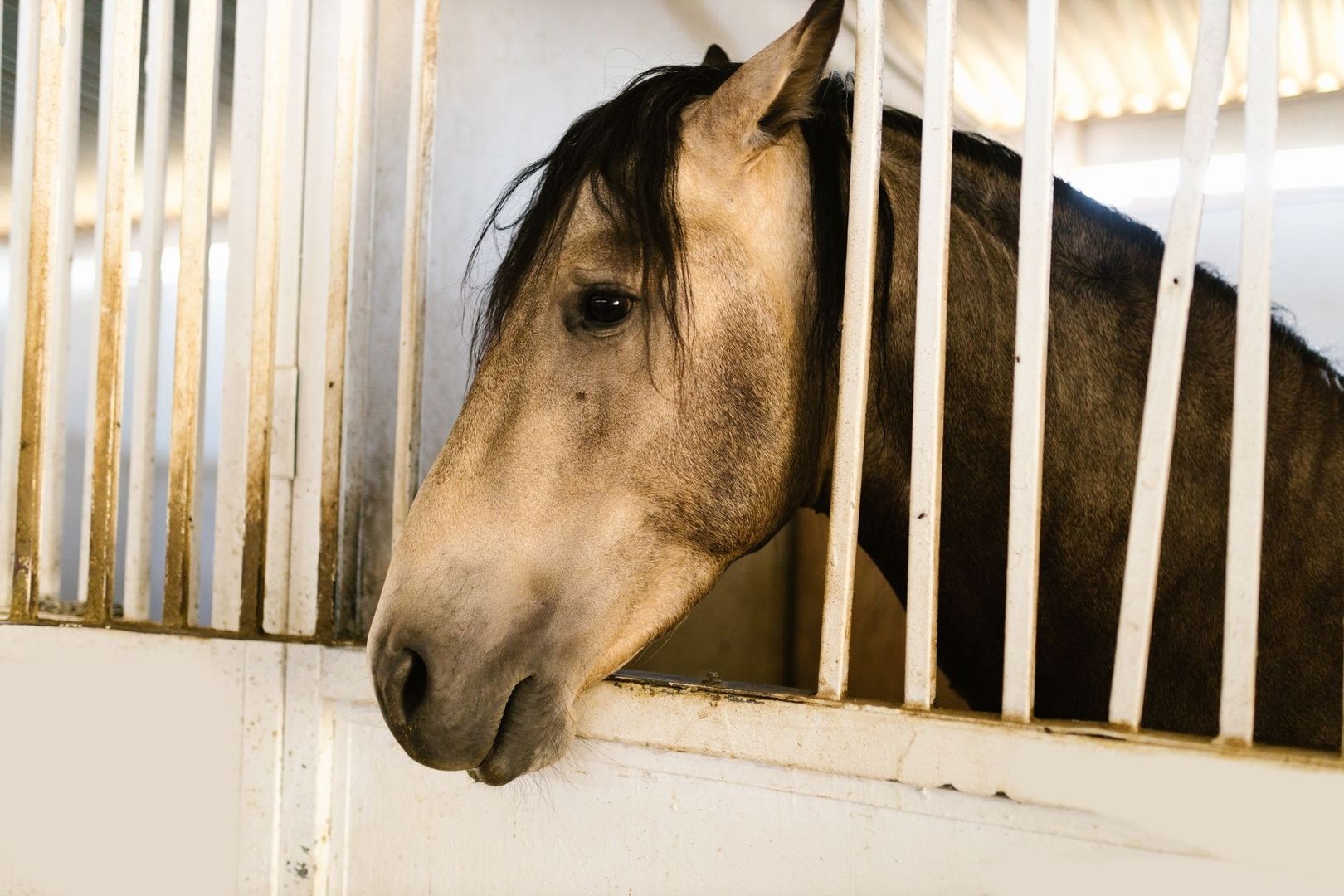
A stall front or pasture fence can feel like an inviting place to meet a horse, but every interaction should begin with permission. The horse may be sleeping, eating, recovering, or receiving training instructions. Some horses enjoy quiet contact, while others prefer to observe visitors from a distance. Hosts and barn managers know those distinctions and can tell you which animals are suitable for gentle interaction.
- Stop several feet away and observe the horse before approaching.
- Speak softly or use a gentle greeting so the horse knows where you are.
- Stand near the shoulder or side of the neck, never directly behind the hindquarters.
- Keep your movements slow and offer the back of your hand for the horse to investigate if a handler recommends it.
- Touch the shoulder or neck lightly rather than reaching straight toward the nose or face.
- Step away if the horse raises its head, tenses, pins its ears, backs away, or turns its hindquarters.
Food deserves particular caution. Treats, carrots, apples, and handfuls of feed may seem like a natural way to make friends, yet horses can have dietary restrictions, allergies, medication routines, or learned habits that make unscheduled feeding unsafe. Always coordinate treats through the bed-and-breakfast hosts or barn manager. Never offer food over a fence, through stall bars, or to a horse that is actively eating unless a responsible handler has specifically invited you to do so.
Pasture boundaries also require care. Never lean over electric fencing, climb through rails, or unlatch a gate without instruction. A horse may approach the fence quickly, and a gate can swing or become a dangerous pinch point. Keep hands, cameras, and loose clothing away from moving latches. If a gate must be opened, ask a staff member to demonstrate the correct procedure and make certain every horse is accounted for before passing through.
Sensory Etiquette for Rural Stays and Country Walks
Practical clothing makes a stable visit more comfortable without compromising a polished weekend wardrobe. Closed-toe, mud-ready footwear with secure soles is preferable to sandals, smooth fashion boots, or loose slippers. Choose fitted layers that will not catch on latches or fencing, and avoid dangling scarves, swinging handbags, and long accessories. A waterproof jacket, warm socks, and clothing suitable for changing weather can make the difference between a pleasant walk and an uncomfortable retreat indoors.
Sound and movement should be kept measured around horses, training arenas, and paddocks. Avoid shouting, running, sudden waving, and flash photography, especially when a horse is being ridden, loaded, groomed, or handled. Ask before taking close-up photographs of staff, riders, or animals, and respect requests to keep phones or cameras away. Properties differ in their visitor policies. For example, working public farms such as Ardenwood Historic Farm and Lake Metroparks Farmpark publish specific rules about animals, facilities, pets, and visitor activities, illustrating why checking local guidance matters.
- Keep dogs leashed and well away from horses unless the property expressly permits otherwise.
- Supervise children closely and teach them to walk, speak quietly, and ask before touching.
- Stay on marked paths and never enter a paddock, arena, or field without permission.
- Do not bring bicycles, scooters, drones, or other noisy equipment into stable areas unless approved.
- Close gates and leave fences, signs, tools, and historic features exactly as found.
These simple choices preserve the atmosphere that makes a rural stay so appealing. A stable is not merely scenery for a photograph. It is a home for animals and a workplace for people, often connected to generations of agricultural and equestrian heritage. Quiet observation allows guests to notice the small details: the rhythm of hay being placed, the soft swish of a tail, the changing light across a paddock, and the unhurried precision of familiar chores.
Savoring Meaningful Moments in Countryside Stables
Thoughtful etiquette transforms a visit to a working stable from a passive sightseeing stop into a more meaningful countryside experience. By watching before approaching, leaving clear paths, following staff instructions, and respecting each horse”s personal space, guests can enjoy the atmosphere without adding pressure to the daily routine. The result is a stay that feels both comfortable and connected to the land.
Slow down and let the stable reveal itself at its own pace. Notice the gentle cadence of feeding, grooming, turnout, and evening checks, while appreciating the pastoral heritage that continues through ordinary work. With warmth, curiosity, and renewed confidence, you can step into the stable aisle knowing that considerate behaviour is the most valuable form of equestrian etiquette.